Autonomous & Connected Earth

Britain’s Drone Economy is Stuck Between Trial and Take-Off

July 30, 2026

The UK drone economy could be worth up to £45 billion by 2030 and the Government has set a course for routine Beyond Visual Line of Sight (BVLOS) drone operations by 2027, including last mile deliveries. The technology exists. The investment has been made. So why is almost every commercial drone flight in Britain still an exception rather than the rule – and what would it take to change that?

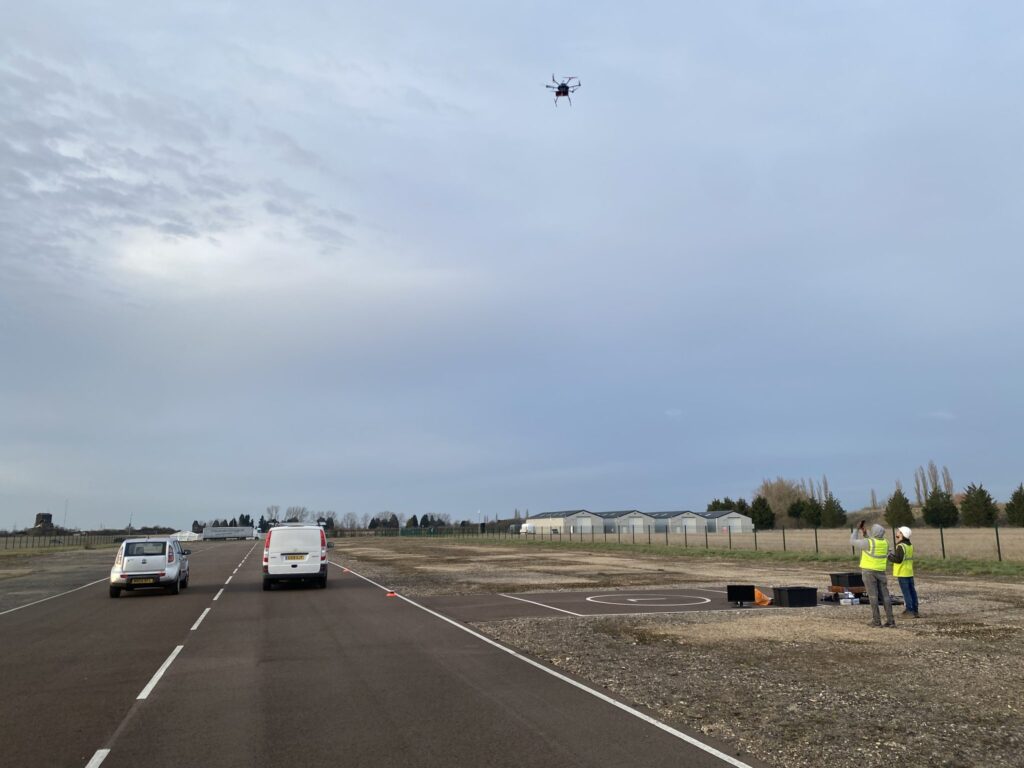
Two people operate a drone near an airstrip, as two vehicles drive on an adjacent road under a cloudy sky.

the prize in numbers

£45bn

potential value of uk drone economy by 2030

76,000

drones that could be operating over britain

2027

target for routine bvlos operations

£300m

future flight challenge investment

On paper, the UK’s autonomous aviation ambitions are in good shape. The Department for Transport’s Future of Flight Action Plan targets regular drone deliveries across UK skies by 2027.1 The drone economy could be worth £45 billion by 2030, with as many as 76,000 drones operating over Britain.2 The Future Flight Challenge has invested up to £125 million, matched by £175 million from industry.3 And the results are visible: NHS trials have cut delivery times for urgent medical items by up to 85 per cent, reduced costs by an average of 28 per cent, and cut CO₂ emissions per delivery by 98.4 per cent compared with courier vans.4 Since early 2026, drones have been carrying urgent pathology samples across south‑west London as a live operational service.5

And yet each of those achievements remains what it started as: a project. A trial here, a sanctioned route there, each individually authorised, each time-limited, each an exception to the ordinary rules of the sky. And each is a long way from the goal of drones flying planned routes at scale without a pilot physically watching. Between the UK’s proven capability and the routine everyday operations the Government has targeted is a gap, and it is important to be precise about what that gap is.

The explanation most often given is regulation. The frustration behind it is real: for a company trying to plan and invest, the current environment is genuinely hard to navigate, but as a diagnosis, it’s incomplete. The real constraint is more fixable: the UK has never built the shared infrastructure – the places to test and the airspace to fly in – that turns a promising drone into a proven one. Almost everything else follows from that.

“There’s no single rule that prohibits commercial drone operations, and the technology itself isn’t the blocker,” says Phil Coglan, who manages the Satellite Applications Catapult’s Drone Test & Development Centre at Westcott, one of the CAA’s Recognised Test Sites. The UK’s approach is performance and risk-based: rather than working through a prescriptive equipment list, operators must demonstrate that a specific operation is safe – typically through an Operational Authorisation or a SORA-based assessment. It’s a sensible principle, but it leaves each company to work out for itself what safe looks like in practice. “For a company trying to build a business case, that’s genuinely hard to navigate,” says Coglan. “Compare that to countries such as Norway or Japan, where the pathways to approval can be easier to map against defined requirements – you can identify what’s needed and build a clearer roadmap to compliance.”

“Technology is ready. Regulation is progressing at pace. But we’re doing it all in silos – small, limited pilots often testing a single drone operation or use case,” says Chris Brook, Mission Manager for Space-Enabled Autonomy at the Satellite Applications Catapult. “We never actually fly things together, so we never learn what the separation distances need to be, what the closing speeds are, what the buffers should look like.”

There’s no single rule that prohibits commercial drone operations, and the technology itself isn’t the blocker

Phil Coglan
Drone Test and Development Centre Manager


The world isn’t waiting


No country has yet achieved routine, economy-wide commercial drone operations, but the leaders are building the infrastructure to get there, and the pattern is consistent. Progress requires access to environments where companies can test, validate and demonstrate safety in realistic conditions repeatedly and without starting from scratch each time.

In the US, BVLOS approvals grew from 1,229 in 2020 to 26,870 in 20236, supported by dedicated infrastructure such as the 50-mile NUAIR corridor, which has hosted more than 6,000 BVLOS flights.7 “The US has vastly more space for testing, deeper pools of capital, and a much greater appetite for risk,” says Brook. “Whatever they back, they back at scale and at speed.”

China is more striking still. In Shenzhen, drone delivery is not a trial but an everyday consumer service, with operators flying thousands of deliveries a day across the city. And every one of those flights adds to something the UK lacks: flying hours. Time in the air, logged and documented, is what convinces regulators, reassures buyers and drives down costs. The companies doing it are better funded and more experienced with every month that passes.
“Interestingly,” says Brook, “China is now looking to the West to understand what regulation they should put in place – they let things fly first and are working backwards. There’s potential for learning in both directions.”

None of this transfers neatly to the UK, which has crowded skies, dense population and some of the most congested airspace in Europe – so the evidence bar is higher here than in countries with more room to fly. But the competitive point is hard to ignore. When routine operations do open in the UK, the companies best placed to win the work won’t necessarily be British. They’ll be the ones that arrive with years of flying hours already logged, established operations and deep funding behind them – having done their learning in markets that let them fly. UK firms would be competing at home against rivals who turn up already proven.

What differentiates countries is not the quality of their technology, and not even the strictness of their rules. It is how effectively they convert technology into evidence, and evidence into everyday operations.

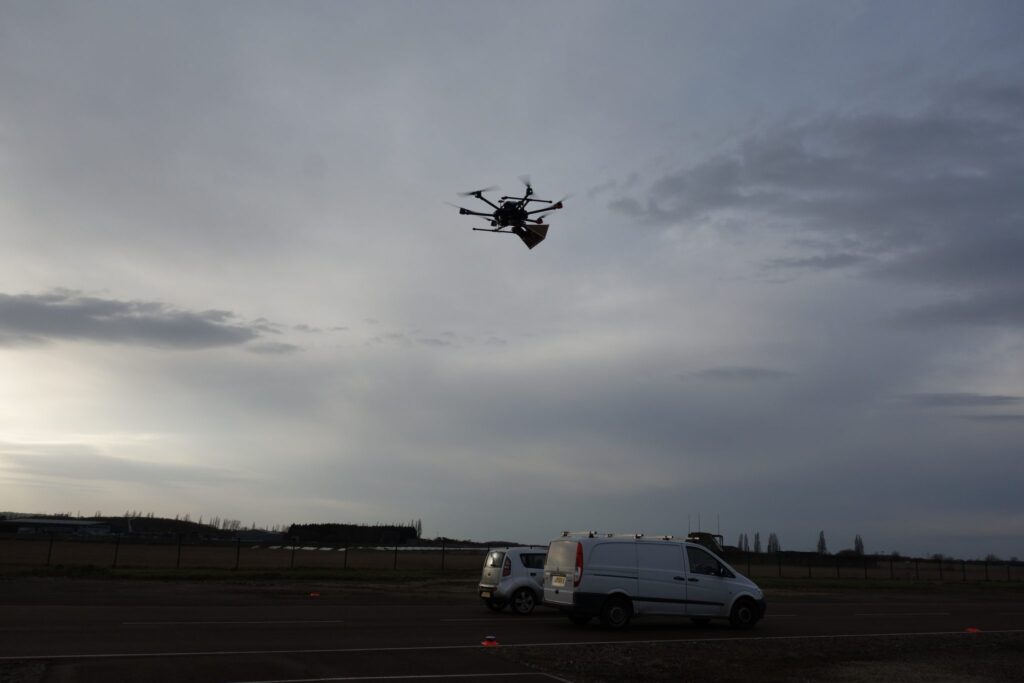
A drone carries a package while flying over two parked vans on a cloudy day near a field.

The trial trap


Here is the UK’s particular version of the problem. Britain is genuinely excellent at funding and running drone trials – through Future Flight, defence pathways and dual-use programmes. The CAA has authorised landmark BVLOS trials spanning consumer delivery, offshore wind inspection and medical logistics. Segregated airspace for a trial can be arranged relatively smoothly.

“The problem is that those trials are temporary and exclusive,” says Brook. “You shut everyone else out while you run them, and they tend to serve a single company’s needs rather than answering the bigger questions that the whole market needs answered.”

Temporary is the key word, and it is the problem the sector discusses least. A trial ends, the airspace arrangement lapses, and the learning goes with it. The next operator starts again: new application, new risk assessment, new time-limited window.

However impressive the results – and an 85 per cent reduction in NHS delivery times is impressive – each project remains an island. No company can build a five-year business case, and no investor will fund a fleet, on airspace access measured in months. A patchwork of time-limited exemptions is not infrastructure; it’s a queue.

There are encouraging signals of change. The Regulatory Innovation Office has helped push BVLOS up the agenda, and the CAA’s Future of Flight roadmap talks openly about routine BVLOS operations by 2027. But regulatory permission and operational infrastructure are different things – and the deeper question, of how drones safely share sky with light aircraft, gliders and parachutists, cannot be answered with segregated, short-lived airspace. The UK keeps proving that drones work, without turning that proof into systems that would let them keep working.

The problem is that those trials are temporary and exclusive… they tend to serve a single company’s needs rather than answering the bigger questions that the whole market needs answered

Chris Brook
Mission Manager for Space-Enabled Autonomy

Meanwhile the evidence burden on individual companies is rising, not falling. The UK’s adoption of SORA – the risk-based framework now used to assess complex operations – asks each operator to define their own concept of operations and demonstrate safety with evidence. A sensible principle, but a heavy lift.

And this isn’t only about the aircraft. Flying beyond the pilot’s line of sight depends on connectivity that doesn’t drop out, which means satellite and mobile networks working together – especially in rural areas, where many of the most valuable use cases live, but where mobile coverage also thins out. It also depends on navigation that can’t be easily jammed or spoofed, a threat that is growing in the real world. Proving drones are safe means proving all of that too: the aircraft, the ground systems and the links through space that hold it all together.

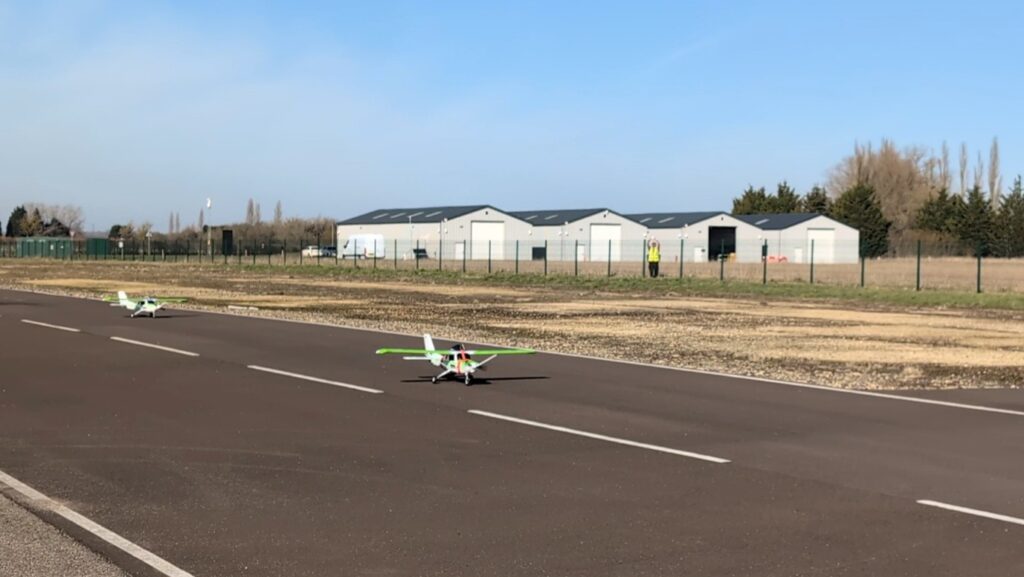
Two small model airplanes on an asphalt runway, with buildings and trees in the background under a clear sky.

The companies carrying the weight


Large operators and primes can manage that. They have regulatory teams, capital and patience. The weight falls hardest on smaller firms, and hardest of all on those building the components the rest of the sector relies on: navigation, sensing, communications, autonomy software. These companies face the testing barrier earlier than most, as they must prove the kit is safe before an operator will design it into a system. These SMEs are exactly the high-potential businesses the UK is counting on for growth. Not just to use the technology, but to build it, own it and export it. And they carry a disproportionate share of the burden through no fault of their own.

For years there was nothing to help them at all. “If you were developing a drone, you found a field and flew it,” says Coglan. “There was no baseline standard and no formal framework for evidencing what your system could do.”

A structure has since begun to emerge – Recognised Test Sites among it – but it is early, partial and nowhere near the scale the market needs. Companies still know how to build the technology; what they often can’t get is a clear picture of what evidence proves it’s safe.

And the places where that evidence can be produced to the right standard remain thin on the ground – most priced for defence budgets or sitting behind security clearances.

Coglan reaches for an automotive analogy. “When a manufacturer wants to demonstrate a car’s emergency braking performance, they take it to a facility like Millbrook, drive it round a track and measure everything. The data makes the safety case – no one has to take anyone’s word for it. That’s the model we need for drones. If a company has established its system’s operational wind limits, or defined the rain conditions it can fly in, that data goes directly into a regulatory application as concrete technical evidence. It shifts the conversation from a safety case built on assertions to one built on reproducible test results. That’s better for companies, better for the regulator, and better for the industry.”

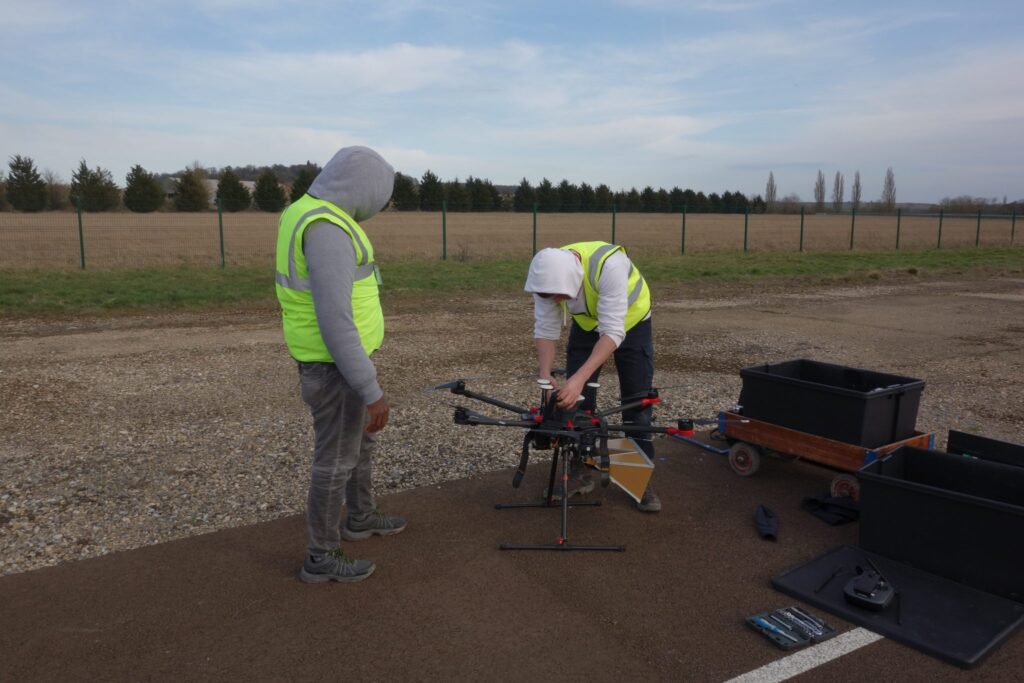
Two people in safety vests prepare a large drone on a paved surface beside black equipment cases.

The cost of standing still


The consequences of inactivity will compound. First, the UK forgoes benefits it has already proven: the NHS results were not projections but measured outcomes, currently confined to point-to-point trials. Second, the supply chain weakens: without a visible domestic market, smaller companies cannot make the investment case – and some have already gone under, as the eVTOL sector has shown. Third, the UK cedes intellectual property and sovereign capability in a technology that matters as much to national security as to the civilian economy.

“We’ve seen this pattern before,” says Brook. “The UK has lost significant manufacturing and export capability over the past few decades, and with it the ability to generate economic growth through sovereign technology. In a worst case, a foreign company ends up providing drone services in the UK, and the economic benefit flows back overseas.”

The ambition is set: routine BVLOS operations by 2027, a market worth up to £45 billion by 2030. The R&D investment has been made. The use cases are proven. What remains is the unglamorous middle – getting government, industry and the regulator aligned, and building the accessible testing, the shared evidence base and the persistent operating environments, on the ground and in orbit, that turn Britain’s innovation into Britain’s market.


A man with short brown hair and a beard, wearing a suit jacket and white shirt, looks at the camera.

Chris Brook is the Mission Manager for Space Enabled Autonomy at Satellite Applications Catapult, supporting the growth and commercialisation of autonomous systems through space-based technology. Chris has a background in implementing autonomous systems within the defence sector having spent five years at BAE Systems working on maritime autonomy with the Royal Navy. He also spent three years working in the civil maritime sector looking at the implementation of autonomous vessels and new fuel regulations in line with the Maritime and Coastguard Agency.

Phillip Coglan is a seasoned Unmanned Air Systems (UAS) expert with over 15 years of experience spanning military, commercial, and research sectors working in both the UK and Europe. Currently serving as the Drone Test and Development Centre Manager at the Satellite Applications Catapult, he brings deep expertise in UAV operations, flight safety, and regulatory compliance. A former British Army UAS Commander, Phillip has led operations in high-pressure environments globally and played a pivotal role in developing safety frameworks for BVLOS operations, research and development for new uncrewed systems and operational delivery.

Smiling man with a beard in a tuxedo and bow tie, wearing military ribbons on his jacket.

All pictures from our Drone Test and Development Centre at Westcott Venture Park


Satellite Applications Catapult

+44 (0)1235 567999

marketing@sa.catapult.org.uk

We help organisations make use of, and benefit from, satellite technologies, and bring together multi-disciplinary teams to generate ideas and solutions in an open innovation environment.