Autonomous &
Connected Earth
Our mission is to accelerate development and adoption of essential technologies that enable universal connectivity and space-enabled autonomy.
Mission overview
In a world where connectivity underpins so much of what we expect and take for granted in everyday life, seamless, reliable, ubiquitous connection is essential. Economic growth too, relies on resilient connectivity being available across the UK and globally. Satellite and terrestrial network integration is essential to bridge connectivity gaps, as well as strengthen UK national infrastructure and digital ecosystems.
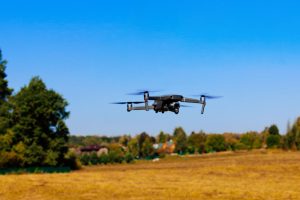
In the last decade, the UK has seen increasing interest and investment in autonomous systems for drones, cars, and unmanned aircrafts. Safe deployment of autonomous systems could mean better access to healthcare for remote areas, safer operations support, and linear infrastructure monitoring. However, this cannot be achieved without advances in Position, Navigation, and Timing (PNT), better regulation and clear pathways for safe adoption of autonomous systems, and universal connectivity.
One of the goals of our Autonomous and Connected Earth (ACE) Mission is to ensure that space technology supports the safe adoption of autonomous systems across key sectors, of which resilient PNT and reliable, seamless, and universal connectivity is an essential component.
Our work will support the UK to become a leader in satellite-terrestrial network integration and digital inclusion by 2035 and advance the adoption of autonomous systems across multiple key sectors.
Barriers
Despite the importance of connectivity, and potential for economic growth autonomous systems could provide, many companies hoping to deliver these products and services face barriers in refining their solutions and bringing them to market. The Autonomous and Connected Earth mission helps these companies by addressing the following barriers:
Interoperability Challenges
Between terrestrial and non-terrestrial networks, as well as between autonomous systems.
PNT Limitations
Limits in existing position, navigation, and timing systems (like the Global Navigation Satellite System) which lack the required accuracy and reliability to safely use autonomous systems.
Barriers to Adoption
Such as access for comms on the move, e.g., on trains.
Regulatory Challenges
Lack of clear standards and accreditation routes, which limits scalability and hinders industry confidence.
In-Orbit Limitations
Limitations in bandwidth and limited orbital resources.
Interventions
Our strategic interventions driving sustainable outcomes through space
The Space Enabled Connectivity intervention addresses the critical challenges of digital inclusion and resilient, future-ready communication systems. It is built around three workstreams targeting specific aspects of connectivity innovation:
The Space-Enabled Autonomy intervention addresses the adoption of safe, efficient, and coordinated autonomous operations across sectors using space-based solutions and technologies. It is built around these key workstreams:
The Demand
Economic growth increasingly depends on reliable connectivity for critical infrastructure and systems on the move, alongside the safe deployment of autonomous systems. These requirements are converging into a single market need, which the Autonomous and Connected Earth Mission plans to answer. Through this mission we will help the space sector address these barriers, develop and commercialise solutions, and unlock connectivity and autonomy, leading to growth of the UK economy.
The drivers for this demand are:
How We Support Businesses and Unlock Economic Growth
Our products and services supporting sustainable space applicatins
Research to Real-World
The ACE Mission provides essential space and expertise to test new technologies and equipment, ensuring they meet regulations and can proceed to commercialisation.
- Collaborate with research and industry partners, across the supply chain and the Catapult Network for innovative CR&D
- Provide early integration pathways for new space-enabled technologies in live network environments
- Expand facilities for added testing and evaluation capability, and partner with key stakeholders to develop digital-twin and simulation environments for design and verification

Scale-up
ACE can support businesses to grow and commercialise their products, customising our approach based on their needs and where they are in their growth journey.
- Develop value propositions and validate business models to create competitive products in new markets
- Support de-risking of technologies and develop demonstrators and proof-of-concepts
- Support strategy development in line with the UK landscape, and co-ordinate relationships with government for procurement and co-financing
Market Opportunity
By directly targeting market requirements and working with end-users and policy makers, the Mission will ensure UK capabilities meet the needs of the growing ACE market.
- Deliver challenge-led accelerators to address market requirements
- Connect actors across supply chain, between SMEs and Primes, and with government
- Develop adoption pathways in collaboration with customers and regulators
Enabling Ecosystem
With the rapidly developing technologies, the ACE Mission is protecting the future by identifying skills gaps and actively participating in the conversations regarding policy and regulation.
- Facilitate UK partnership in shaping international standards, regulations, and spectrum sharing trials
- Identify skills gaps and workforce requirements to support PNT and network convergence needs
- Advise key stakeholders on roadmaps, supply chain strategy, policy, regulations, licences, and standards

Latest Activity
New National Drone Testing Centre to Help Unlock Britain’s £45bn Drone Economy
Satellite Applications Catapult announces investment in the National Autonomy and Drone Innovation Centre (NADIC) at…
Third International Conference on Emerging Trends in Cybersecurity 2026
Happening in Italy, this event encourages industry, academia, and policymakers to collaborate and share insights on…
From Testing to Real-World Impact: Flarebright’s Extera Journey
From Testing to Real-World Impact Flarebright’s Extera Journey Working with the Satellite Applications Catapult, Flarebright…
Britain’s Drone Economy is Stuck Between Trial and Take-Off
The UK drone economy could be worth up to £45 billion by 2030 and the…
C-LEO Funding Opportunity & Consortium Building Workshop
Join us at the Satellite Applications Catapult and the UK Space Agency, in Harwell, for…
The Defence Investment Plan: The UK’s Drone Ambitions and its Space Capability Must Move in Step
Drones are no longer a niche capability. Ukraine plans to manufacture about 10 million drones…
DroneX
We’re excited to be attending this year’s DroneX Trade Show and Conference at the ExCel…
International Satcoms Conference
The International Satcoms Conference is back, hosted by the Institution of Engineering and Technology. Join Richard…
EuCNC & 6G Summit 2026
This year EuCNC will be in Malaga! And will also be happening alongside the 6G…
Get involved
Join us in building a sustainable future through space
Stay updated
Subscribe for news and insights via the form in the footer below.